
Description
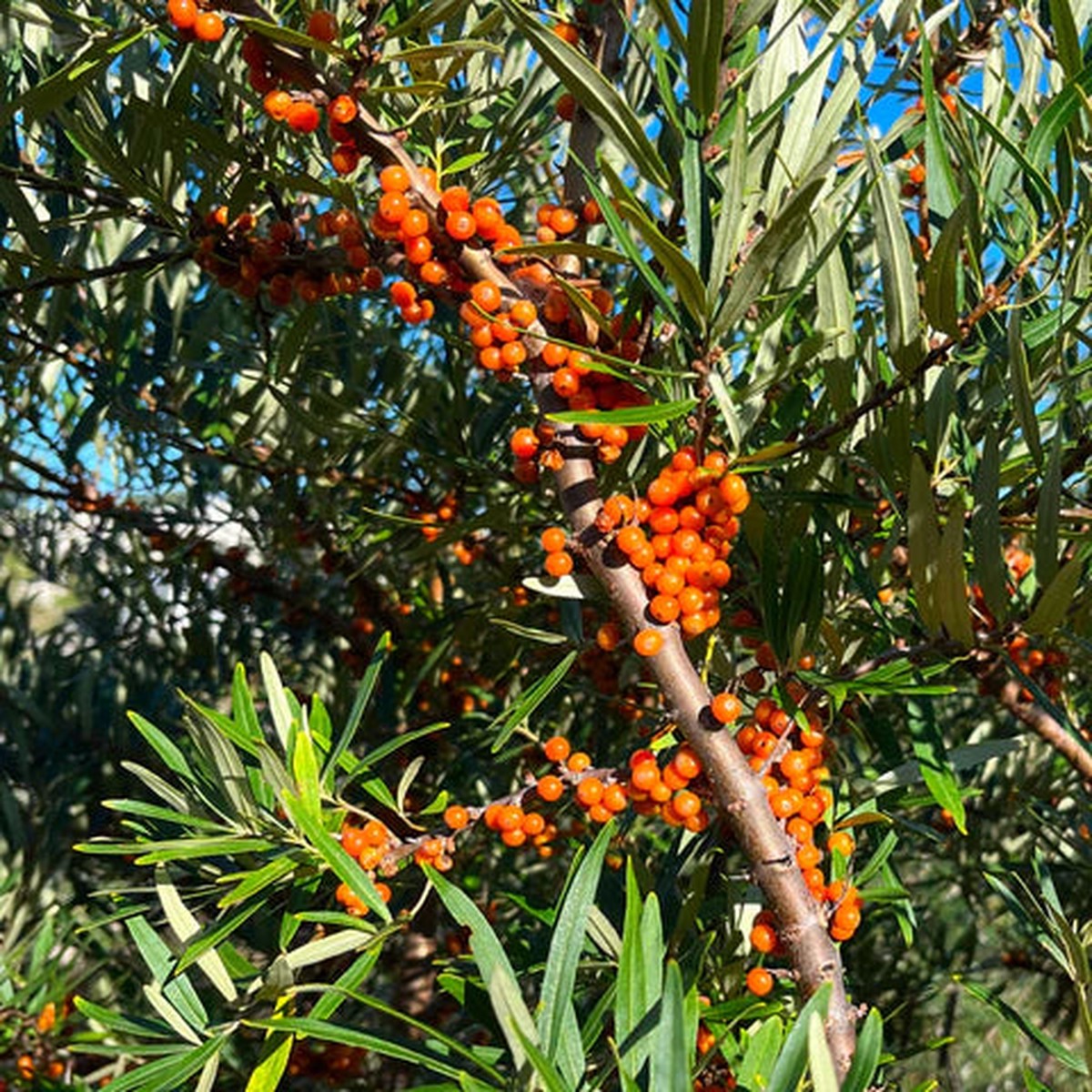
Sea Buckthorn (Hippophae rhamnoides) is a thorny fruiting shrub with narrow, silvery-green deciduous leaves, valued for its bright appearance and exceptional cold hardiness. Its small yellowish-green spring flowers are visually modest because the species is mainly wind pollinated. Fertilized female plants later carry abundant clusters of vivid orange sea buckthorn berries that often remain attractive into autumn. The shrub may reach 2 to 6 m tall and gradually form a dense stand through root suckers. Hardy in Zones 2 to 7, it withstands severe winters, strong winds, and challenging conditions found throughout Quebec and other cold regions of Canada.
Sea Buckthorn requires full sun for vigorous growth and dependable fruit production. It prefers sandy to loamy, well-drained ground and tolerates poor, dry, or mildly saline soil. Root associations with nitrogen-fixing microorganisms allow the shrub to perform with little added fertilizer. Its seeds generally benefit from moist cold stratification before spring sowing. Water young plants regularly while their root systems establish, then reduce irrigation once they are growing strongly. Hippophae rhamnoides is dioecious, meaning male and female flowers occur on separate plants. Since the sex of seedlings cannot be predicted in advance, sowing and retaining several plants improves the likelihood of obtaining both pollen-producing males and fruit-bearing females.
In the garden, Sea Buckthorn is useful for windbreak hedges, defensive screens, dry slopes, northern orchards, and soil stabilization projects. Its suckering roots help secure loose ground but should be monitored to prevent unwanted spread beyond the designated area. Properly identified ripe fruit from female plants has a distinctly tart flavour and can be prepared as sea buckthorn juice, jelly, jam, syrup, sauce, or smoothies. Combine this shrub with Serviceberry, Chokeberry, viburnums, or hardy roses in spacious edible landscapes. Its dense branching also provides useful cover for birds, while the colourful berries extend the ornamental and food-producing value of resilient gardens across Quebec and Canada.

Reviews
There are no reviews yet.