
Description
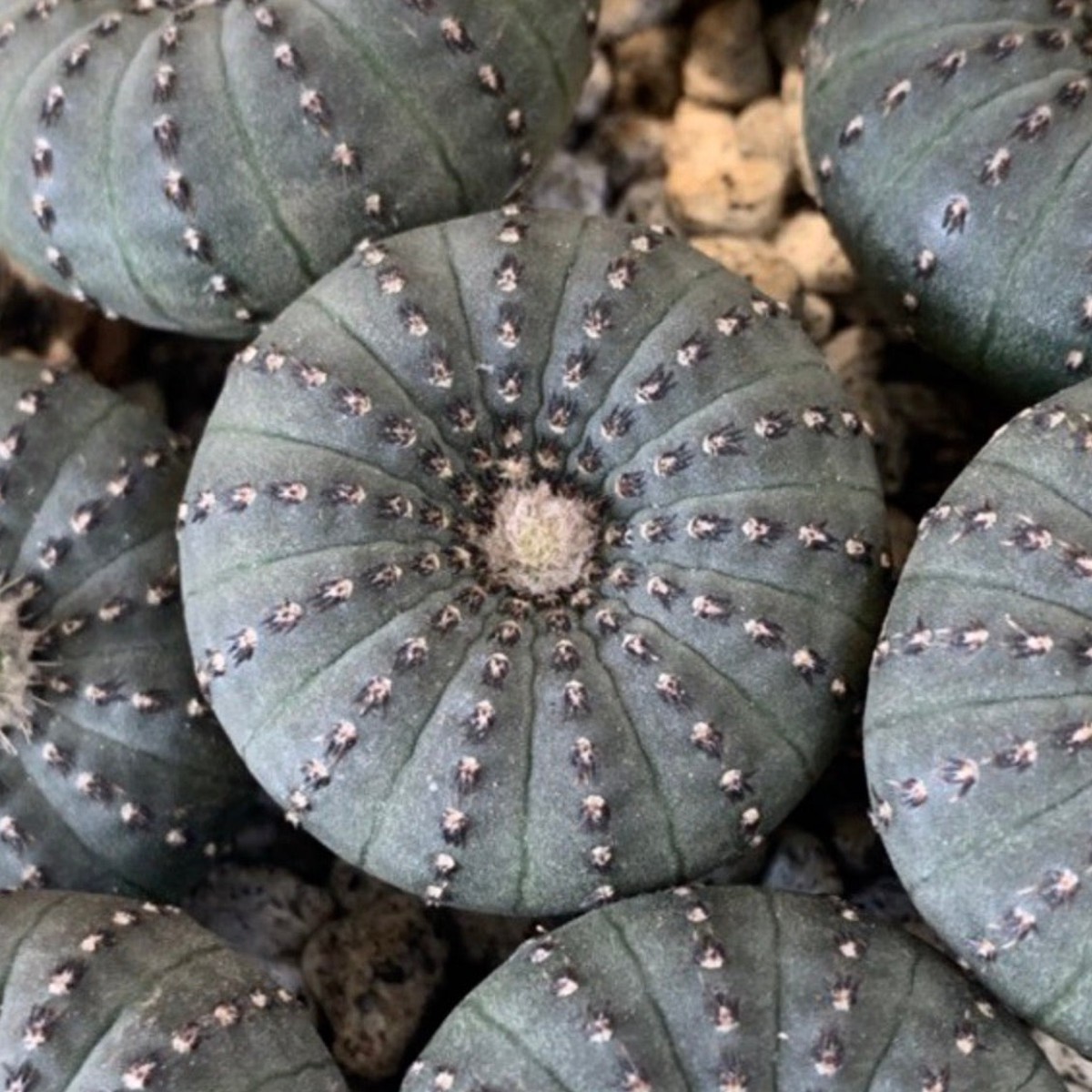
Frailea asterioides is one of the most distinctive dwarf cacti in the genus: a strictly solitary, disc-shaped plant only 35 cm across and barely 2 cm tall, sitting almost flush with the ground on a stout taproot. The skin is a deep chocolate to reddish-bronze brown, divided into about 12 to 15 very low, flattened ribs that are little more than shallow lines. The minute areoles carry tiny dark bristle-like spines, no more than 12 mm long and pressed flat against the body in a comb-like arrangement, so the whole plant reads as a small brown button lying on the soil a resemblance to Astrophytum asterias that gave the species its epithet.
The flowers are disproportionately large for such a small body: glossy bright yellow, 34 cm across, opening only on hot, brightly lit afternoons. Like most Frailea, this species is markedly cleistogamous flowers frequently set fertile seed without ever opening so even a single plant in cultivation will produce capsules on its own. Current taxonomy refers Frailea asterioides Werderm. to the earlier name Frailea castanea Backeb., whose native range runs from Rio Grande do Sul in southern Brazil through Uruguay to north-eastern Argentina, where it grows in open subtropical grassland on shallow sandy and rocky soils; the name asterioides is kept here because it is the one under which this cactus is known and traded among collectors.
- Solitary, flattened disc-shaped body 35 cm across, growing almost level with the soil.
- Chocolate to reddish-bronze skin with about 1215 very low, flattened ribs.
- Tiny dark spines 12 mm long, pressed flat to the body in a comb-like pattern.
- Glossy yellow flowers 34 cm across, often self-fertile without opening.
- Native to southern Brazil (Rio Grande do Sul), Uruguay and NE Argentina.
This is among the easiest Frailea to raise from seed: germination is fast and even, and well-grown seedlings often flower in their second year, unusually quick for a cactus. Use a gritty, free-draining mineral mix in a pot deep enough for the taproot, give strong light with light shading in the hottest hours, water regularly through the growing season and keep the plants completely dry and above about 5 C in winter. Grafted specimens are common in the trade, following Backeberg’s claim that the species is short-lived on its own roots, but seed-raised plants grow and flower well on their own roots when drainage and root room are right.
IMPORTANT: Pictures show the adult plant, which is not for sale. The offer is only for seeds.
Reviews
There are no reviews yet.