
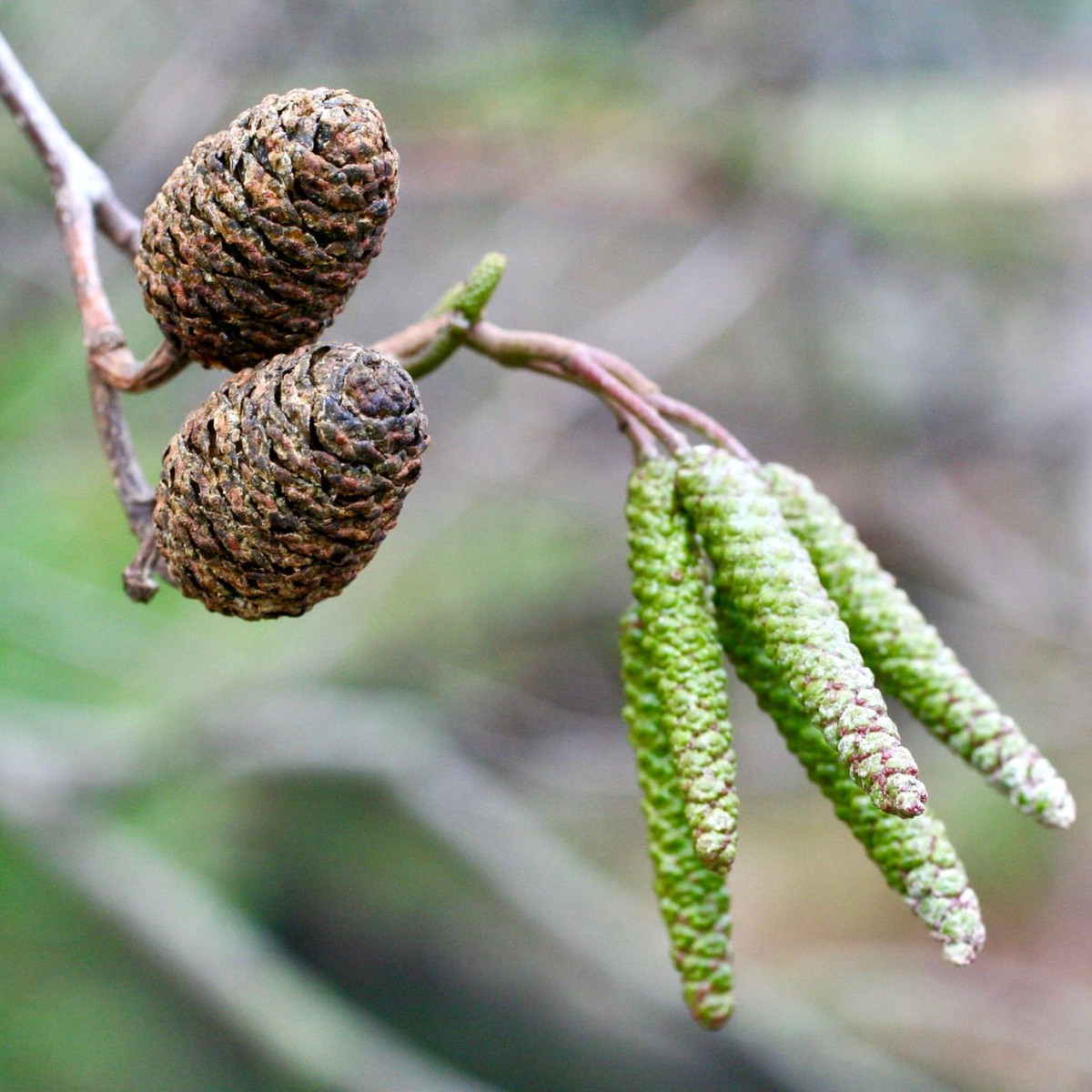
Description
Alnus cordata seeds grow into the Italian alder a medium to large deciduous tree native exclusively to the temperate biome of north-eastern Corsica and the southern Italian Apennines, making it one of the most geographically restricted of all European alders. A Tyrrhenian endemic, it is nonetheless one of the most widely planted alders for forestry and land restoration outside its native range, prized for two unusual characteristics: the distinctively large, heart-shaped (cordata) leaves that are noticeably broader than those of other European alders, and a significantly greater tolerance of dry soils and low summer rainfall than most alder species. Nitrogen-fixing. Family Betulaceae.
Full sun; adaptable to a wide range of soils including chalk and dry conditions; fast-growing. More drought-tolerant than A. glutinosa. Widely used in urban forestry and land rehabilitation across Europe.
- Distinctively large, heart-shaped leaves ‘cordata’ = heart-shaped; diagnostic ornamental character
- More drought-tolerant than most alders; less dependent on riparian habitats
- NE. Corsica and S. Italy (Apennines) only a restricted Tyrrhenian endemic
- Widely planted outside native range for forestry and land restoration; nitrogen-fixing
- Full sun; adaptable to chalk, clay and dry soils; fast-growing
Alnus cordata is one of the most valuable alders for forestry and land restoration the Italian alder’s large heart-shaped leaves, remarkable drought tolerance and fast growth have made it the most widely planted alder for dry-site forestry across Europe, despite its restricted natural range in Corsica and southern Italy.
IMPORTANT: Pictures show the adult plant, which is not for sale. The offer is only for seeds.

Reviews
There are no reviews yet.