
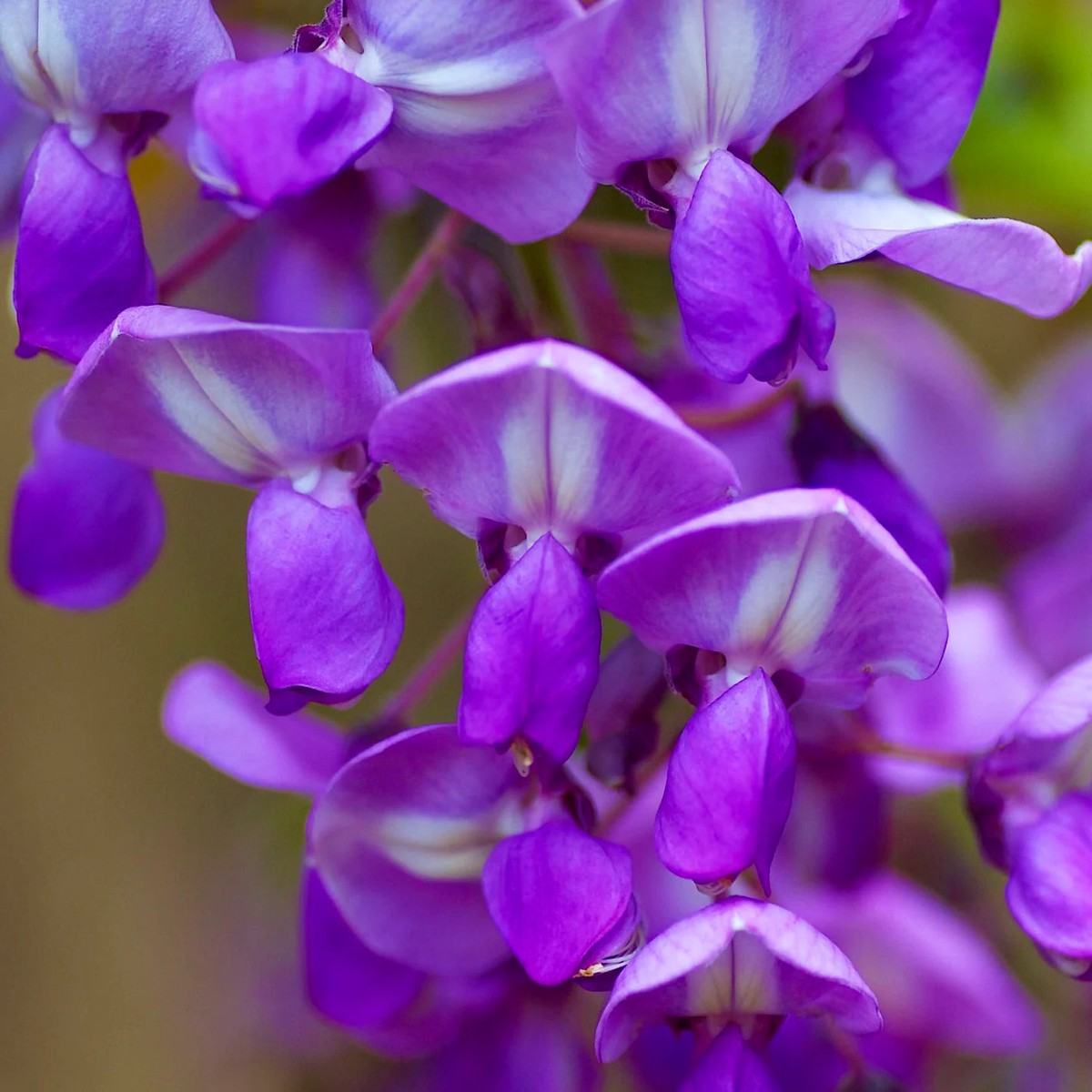
Description
Wisteria floribunda (dark purple) seeds grow into Japanese wisteria a spectacular deciduous liana native to the temperate biome of south-central and southern Japan. Described by (Willd.) DC. (Willdenow originally named it; de Candolle established the current combination). The epithet floribunda means ‘free-flowering’ (from Latin floribundus), a fitting description for the most floriferous wisteria species. Bears the longest flower racemes of any Wisteria up to 60 cm in the species, with cultivars selected for racemes exceeding 1 m. Twines clockwise (unlike W. sinensis, which twines anticlockwise). The dark purple-flowered form produces especially rich, deep violet racemes. Multi-stemmed liana capable of living for centuries. Family Fabaceae.
Full sun; moist, well-drained fertile soils; cool to warm temperate; very hardy (to 20C). Deciduous liana; prune twice yearly (summer + winter) to encourage flowering. Note: may take 310 years from seed to first flower.
- ‘Floribunda’ = free-flowering; (Willd.) DC.; twines clockwise (vs. anticlockwise in W. sinensis); racemes to 1 m+
- Dark purple racemes; longest of any Wisteria; century-old specimens known; S. Central & S. Japan
- S. Central & S. Japan temperate biome; deciduous liana; long-lived; very floriferous
- Genus Wisteria: 10 species; E. Asia and E. North America; Family Fabaceae; Order Fabales
- Full sun; fertile soils; very hardy to 20C; prune twice yearly; patient may take years to flower; Fabaceae
Wisteria floribunda dark purple Japanese wisteria produces some of the longest flower racemes in the temperate garden world, cascades of fragrant deep violet descending from vigorous clockwise-twining stems that may ultimately outlive their planters, the oldest Japanese wisteria specimens being genuine living monuments to horticultural history.
IMPORTANT: Pictures show the adult plant, which is not for sale. The offer is only for seeds.
Reviews
There are no reviews yet.